Showing posts with label Cancer. Show all posts

Wednesday, February 24, 2021

I’m getting rid of my boobs before they get rid of me

March 3rd. A week from today. Disappointed smile

That’s the day that my currently healthy boobs will take leave of my body. I’m still in disbelief that I’m about to do this, and I have the urge every day to cancel the upcoming surgery. But I know that logically I’m doing the smartest thing, hard as it is emotionally, and as hard as the surgery will be physically.

I was born with the BRCA2 gene mutation (which I blogged about last year, after I found out about it). Instead of a 3-ish% lifetime chance of getting breast cancer, I was born with about an 80-ish% chance of developing breast cancer in my lifetime. (Think Angelina Jolie, who was also born with a BRCA gene mutation and had a prophylactic mastectomy.)

Mast cartoon rosalarian.tumblr.com(Thanks, rosalarian.tumblr.com.)

So far, my mammograms and recent breast MRIs have been clear, but it’s likely just a matter of time before I’d be faced with a breast cancer diagnosis. And if that were the case, I’d have to go through this surgery AND chemo/radiation. No thanks!

I’m 64. That means a few things in regard to my mastectomy situation.

One, I’ve already worked through a big chunk of that 80+% chance of getting breast cancer, so my chance at this point is about 35%. I go back and forth, from thinking that 35% is perfectly tolerable and I should just take the risk, to ‘no way; that’s still a huge chance of breast cancer,’ and back again. Round and round and round. It’s mentally and emotionally exhausting!

Two, I’ll be starting Medicare on November 1st of this year, the month in which I’ll turn 65. I was hoping that Medicare would be optional, but for me, it’s not. On the day that I’m eligible for Medicare, my other coverage is hugely affected. Long story short, I will be starting Medicare on November 1st of this year and MEDICARE WON’T COVER PREVENTATIVE SURGERIES. Nope, they want to wait until you actually get cancer, and only THEN would a mastectomy be covered! Yes, this is insane, but there’s nothing I can do about it.

So my hands (or rather, my boobs) have been forced. If I’m gonna do this, I need to do it now. The reconstruction process involves numerous surgeries, so I need to allow time for all this to happen before I begin Medicare.

There are three basic options after a mastectomy – “going flat,” flap reconstruction (which is harvesting fat from other locations on the body and transferring it to the breast… a very long and complicated microsurgery with a long, complex recovery), and implants. Because of my abdominoplasty thirty years ago to repair damage from my twin pregnancy, I’m not a candidate for the most common (DIEP) flap reconstruction and, although I’ve considered it, I’ve decided not to “go flat.” That leaves “gummy bear” silicone implants. This is the one I explored during my appointment with the plastic surgeon. I kinda like the shape, and the smaller size!

gummy

It’ll be months, though, before the gummy will be in my body. Expanders will be placed next week during the mastectomy surgery, and then those will be filled a bit at a time over the next couple of weeks, until I’m at my desired size (smaller). At that point, I’ll undergo an additional (“exchange”) surgery to replace the expanders (which I hear are awful) with the final gummy implants. Fun. (Not.)

Kat’s wedding will take place on May the fourth (of course, Star Wars fans that she and Ian are!) and will be off the grid at Danny’s prospecting claims, where they got engaged (including a very bumpy dirt road – gah!) in California, so we’ll need to work that into the scheduling.

Am I ready? NO. But I don’t know how I ever can really be ready to basically amputate a body part that’s integral to who I am. I’ve chosen to look at it this way: my boobs have nourished four healthy children and have served me well. Now they are trying to (or will likely try to) kill me and they need to go. That’s my logical approach, anyway.

My not-so-logical approach consists of feelings of sadness, loss, and fear.

I’ll let you know how it goes…

Stumble Upon Toolbar

Sunday, March 08, 2020

BRCA. DAMN.

My mother's death in 2004 of ovarian cancer still seems like yesterday - when it doesn't seem like a lifetime ago.

A few months after after mom died, I talked to her oncologist about a recently discovered gene mutation, BRCA, that had been linked to both ovarian and breast cancer. Is there any chance Mom had that gene mutation, I wondered. He assured me that only 3 to 5% of all patients with ovarian cancer have the BRCA1 or BRCA2 gene mutation, so chances were good that Mom didn't have it. He encouraged me to relax and go about my life, but also said it wouldn't be a bad idea to have a genetic test at some point. The price tag of that test back then was over $6000, and insurance wouldn't cover it.

In 1991, many years before Mom died, when the twins were toddlers, Peter was in pre-school, and Elisabeth was in 1st grade, I had a hysterectomy due to severe uterine fibroids (and Mom flew to San Diego for a month to help me out, as she always did when I needed her).

Before the surgery, I remember crossing off the line on the consent form that stated that this would be a "total hysterectomy," meaning that my ovaries would be removed (called an "ooperectomy"), in addition to my uterus. That would throw me into immediate menopause. I was only 36. No way were they gonna take my ovaries if they weren't diseased! So I crossed out that line and told them to wake me up if my ovaries look like a problem and "we'll talk," but they were not to perform an oopherectomy without waking me first. I wasn't woken and my ovaries weren't taken.

Until 2014, when I was through menopause and decided that my ovaries had served me well, but I didn't need them anymore - especially considering Mom's death ten years earlier from ovarian cancer. I was still curious about the BRCA question, but had taken Mom's doctor's advice and not worried much about the possibility that Mom, and possibly I, had the gene mutation. Although genetic testing had become more common and presumably cheaper, my insurance still wouldn't cover it in 2014. It would, however, cover an oopherectomy - so that's what I did.

So my uterus was removed in 1991 and my ovaries were removed in 2014. But when were my Fallopian tubes removed? Why is this important, you ask? Because recent research shows pretty conclusively that ovarian cancer actually begins in the tubes, and that having them removed (called a "salpingectomy") is protective against ovarian cancer AND against breast cancer.

But I'm ahead of myself.

Just before Christmas last year, Kat had the opportunity to have genetic testing through a program at UCSF. She was surprised to learn that she has an ATM gene mutation which, like the BRCA gene mutation, is associated with higher risk of breast and ovarian cancers, as well as prostate and pancreatic cancers. The risk isn't as high as with the BRCA gene, but it is still worrisome and now Kat, who's only 30, must stay especially vigilant with screening measures. She wondered who she got this ATM mutation from, so asked Tom and me to be tested through Color Genomics. Amazingly, the test was only $50 for first degree relatives of those with a mutation ($300 otherwise - still a bargain compared to $6000!).

Instead of getting my results online, I received an email, asking me to make an appointment to speak with a Color Genetic Counselor. Guess that ATM mutation must have come from me, I thought. Imagine my surprise when, while on the phone with the counselor, I saw this:

All this time, I had the BRCA gene mutation after all, and didn't know it!

The counselor told me that the chance of someone with the BRCA2 mutation getting breast cancer by the time she's 70 is a whopping 74%. "I'm 63; does this mean that chances are 74% that I'll develop breast cancer in the next seven years?" I asked him. No, he assured me, the chance decreases from that number each year that you're NOT diagnosed with cancer. But yes, my chances are pretty dang high.

And that calculator doesn't add my 26% Ashkenazi Jewish heritage from my dad's side, which puts me at additional risk.

I'd just had my yearly mammogram the week before I received this news. It was clear. So that's good. But SHIT! Really? Haven't we had ENOUGH cancer in our family recently?

The counselor noticed from information I'd provided previously that my ovaries had already been removed. As an oopherectomy is recommended for all women with a BRCA gene mutation, I was ahead of the game. "But," he said, "You might want to consider a prophylactic mastectomy. And you'll also want to get a breast MRI, just to confirm the findings of your recent mammogram." I did that last week (such fun... not!) and thank goodness, it was clear, too. So I do not have breast cancer... at this point. And for now, at least, I can postpone a mastectomy until at least next Fall.

Stanford has a great tool which can be used to predict the chances of getting breast cancer, given previous protective measures taken. Remember that it now looks like ovarian cancer begins in the Fallopian tubes - and that I don't know whether mine were taken in 1991, or 2014... or maybe even never. You can imagine my confusion, then, with THIS:

Looks confusing (ignore the "current age" box; what-ifs only work looking forward), but it basically predicts that if I had my ovaries (and presumably tubes) removed at 35 and I have no mastectomy, my chance of not getting cancer (by when?) is 46%, and only 1% greater if I have a mastectomy. If I had my ovaries (and presumably tubes) removed at 55, and I have no mastectomy, my chance of not getting cancer is 18%, and only 1% greater if I have a mastectomy. But when were my Fallopian tubes removed?! 

I requested records from the 1991 surgery and received this in the mail:
 Damn! I tried to call this doctor and was shocked to get a return call from him. He remembered me because my twins were born on 11/9/89 as the Berlin Wall was coming down. It was unforgettable to me and my family, for sure, but apparently it was also unforgettable to him! We had a delightful conversation, but he insisted that he "would have never" removed my tubes if he didn't take my ovaries. Now what?!

I am also in contact with the surgeon's office who did the 2014 surgery. Her nurse assured me that the tubes are almost always taken with the uterus, so they wouldn't have taken them in 2014. Could this mean I still have them? That would most decidedly NOT be good!

So here we are - my new normal. It's a bit disconcerting, but I'm getting used to it.


****UPDATE****
My tubes were taken with my ovaries in 2014! Just received the surgical report that confirms this. When removed, neither tubes nor ovaries had any sign of disease. So glad to have that mystery solved!


Stumble Upon Toolbar

Wednesday, July 17, 2019

Cancer? At 32?

June 14, 2019 will forever be remembered in our family - both for a very happy event and for a very scary event. 


Our first grandson, Leo, was born that morning at Swedish Hospital in Seattle. Unbeknownst to us, our 32-year-old son, Peter, was also at Swedish that morning. He and his wonderful new girlfriend, Shannon, had decided to do what mature, responsible adults in a new relationship do - get an STD screening. Peter, a healthy young male, hadn’t felt the need to see a doctor in a very long time - since moving away from home about ten years ago, in fact - so he didn’t have a primary care provider in Seattle. I had been urging him to have a check-up for years, but it wasn’t until this decision to be screened that Peter decided to finally make the call. 

It was a call that likely saved his life, prompted by a girlfriend who just happens to be, of all things, an oncology nurse. 


 On that call to set up a screening appointment, Peter mentioned “a swelling.” The intake receptionist immediately kicked into high gear, knowing (as we have learned since) that any painless lump and/or swelling in the testicle is to be taken very seriously, especially in young men aged 15 to 33, as this is the group most affected by testicular cancer. (Peter is actually on the old end of the spectrum!)

Suddenly, the low-key STD screening that Peter initially expected had become a “triage” day of blood tests, an ultrasound, and a chest x-ray. At the end of the day, all alone in a radiologists examination room, Peter was given the very distressing news that he almost certainly had testicular cancer. Regardless, he was told, his testicle would need to be removed (an orchiectomy) - and soon. 

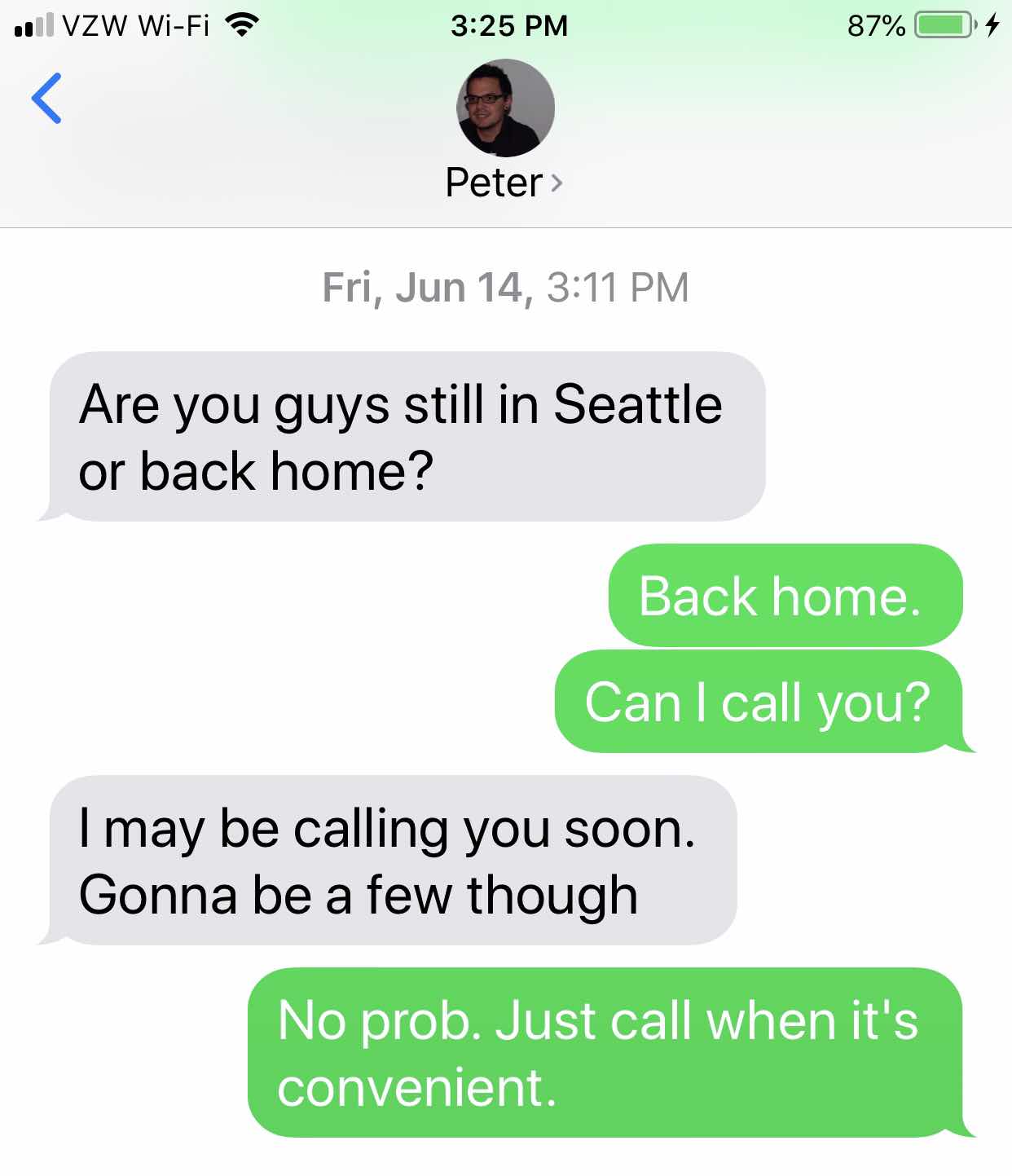
Peter must have texted me soon after hearing that news. 


I sensed no urgency from Peter’s text, nor from his call about an hour later, which he began by congratulating us on becoming grandparents. 

“Thanks! And congratulations to you on becoming an uncle!”

Peter then mentioned something about also being at Swedish all day and having some tests, and... wait... something about an ultrasound that showed... what... wait — 

WHAT?? 

CANCER??! 

Yes, our oldest daughter had a baby and our oldest son was diagnosed with cancer on the same day and in the same hospital. How crazy is that? Talk about an emotional rollercoaster! 

Peter has since said that the phone call to us that day was the hardest part of his ordeal with cancer - including the surgery and all the waiting. 

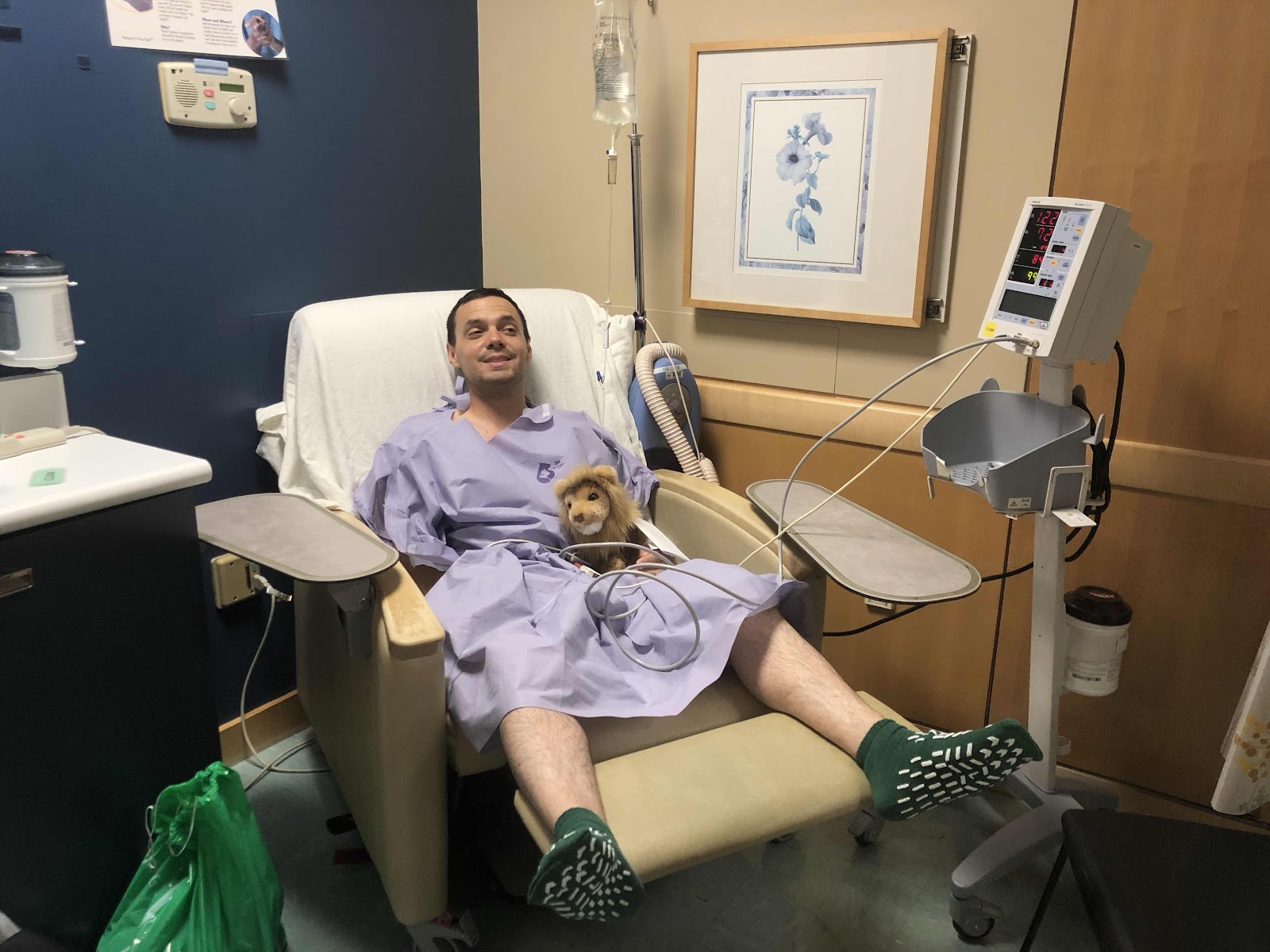
Exactly a week after Peter’s awful day alone at the hospital, he underwent an orchiectomy.


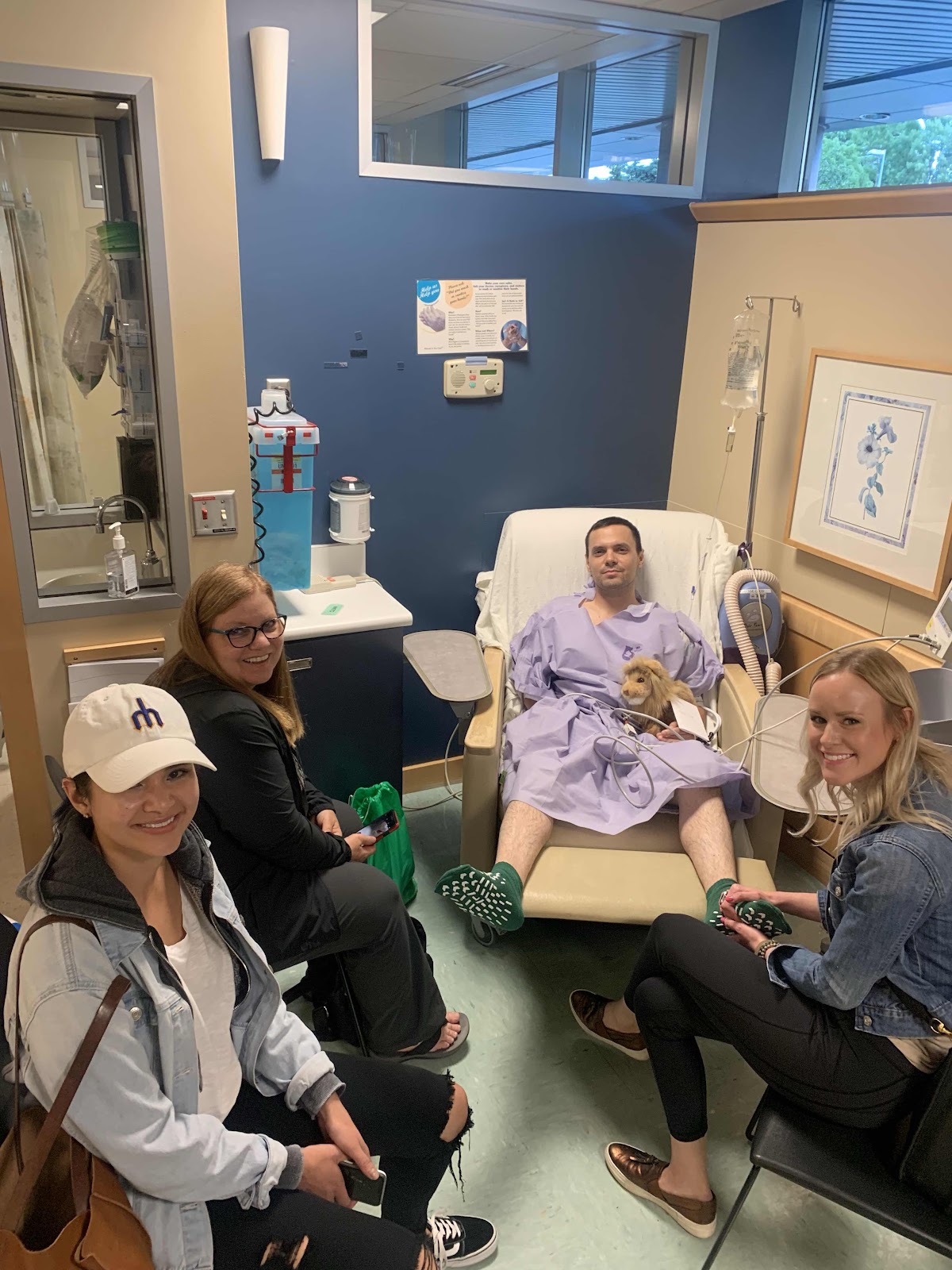
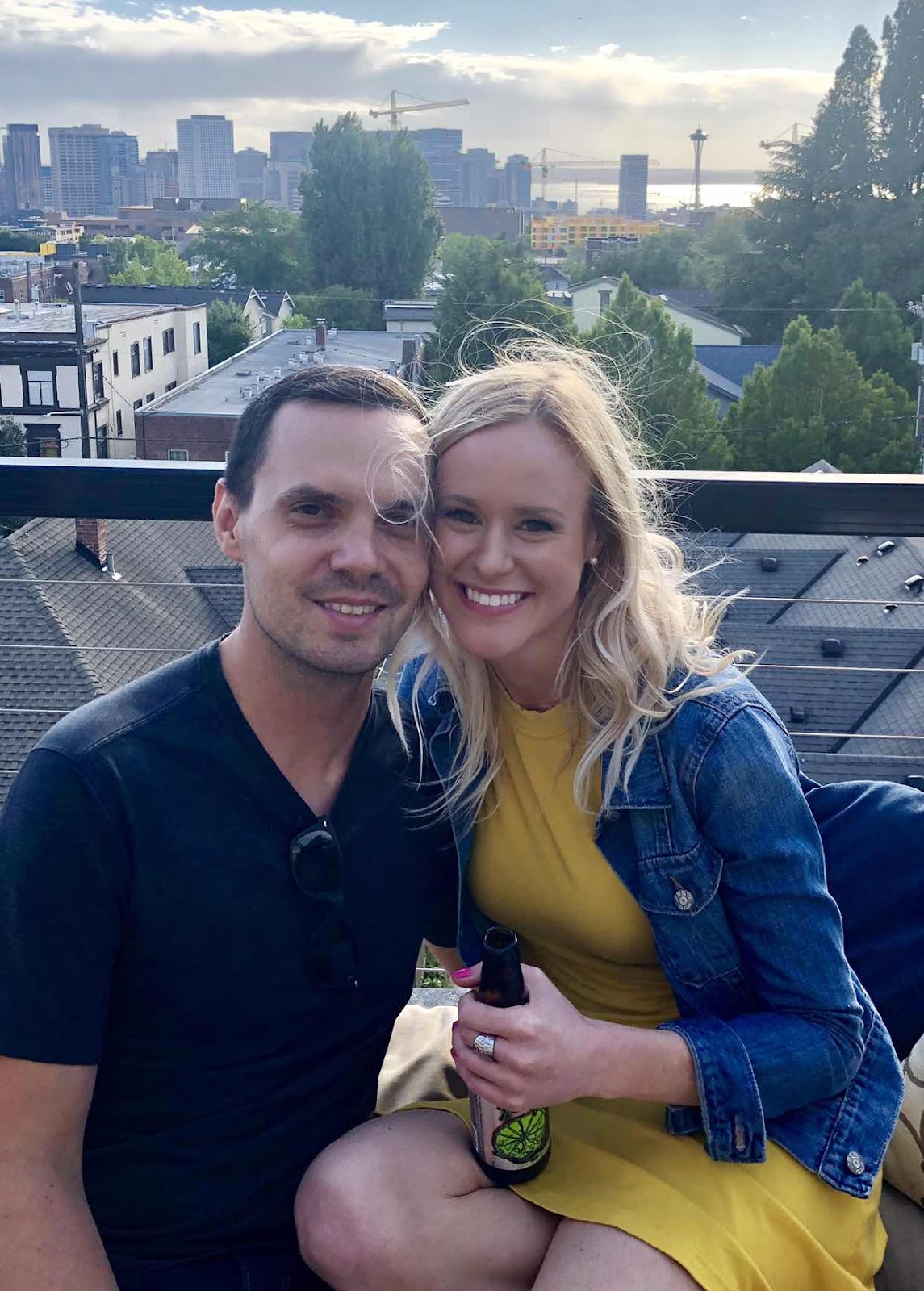
Peter’s support team consisted of Erin, Alex’s wonderful girlfriend (Alex was in San Francisco house/pet-sitting while his twin sister, Kat and her SO, Ian, were in Thailand), Tom (not pictured), me, and Peter’s sweet girlfriend, Shannon. 


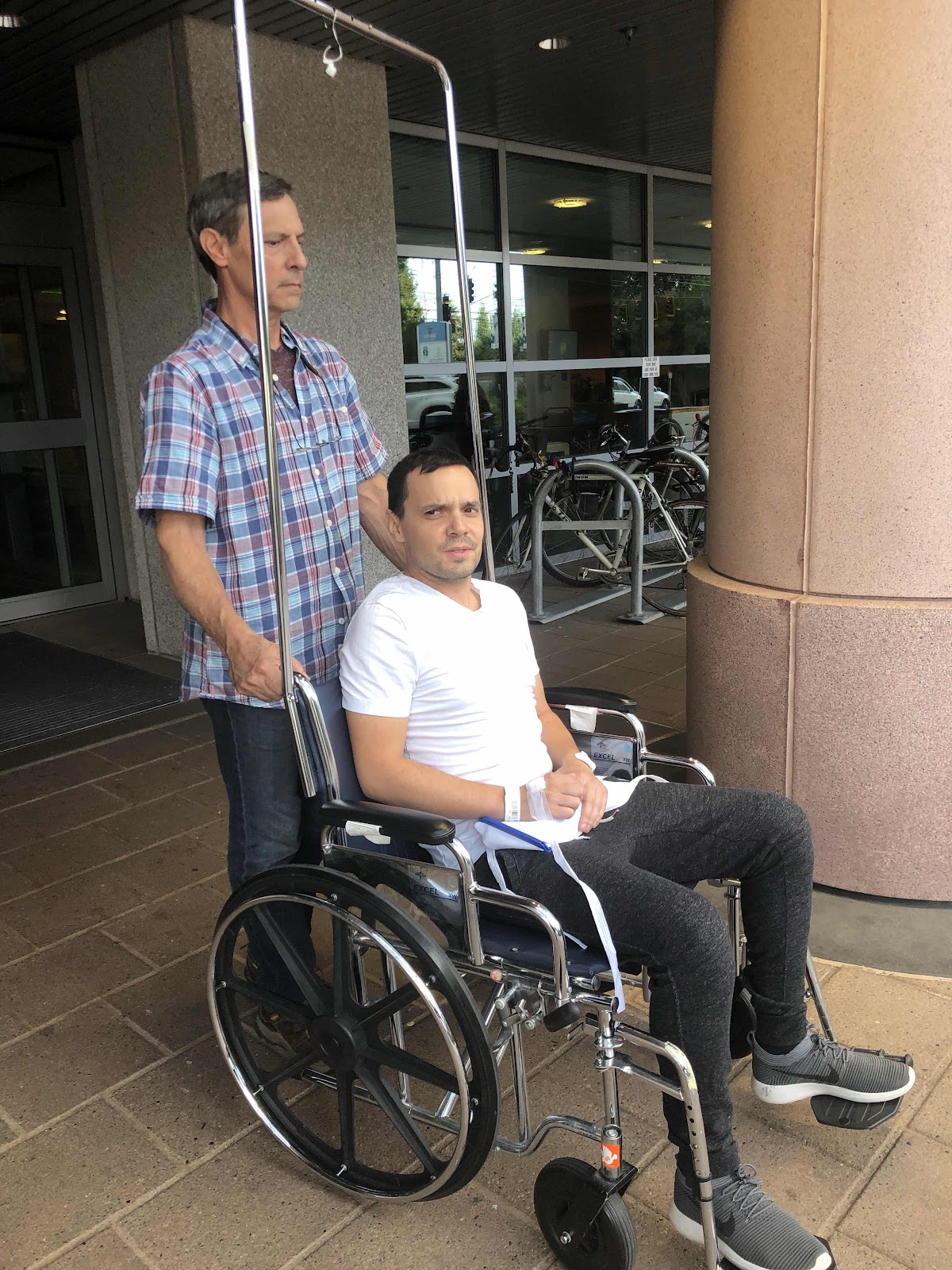
Fortunately, the surgery, which went well, was out-patient. 


That weekend, Peter had his own private nurse to take care of him at home. Thank goodness for Shannon!


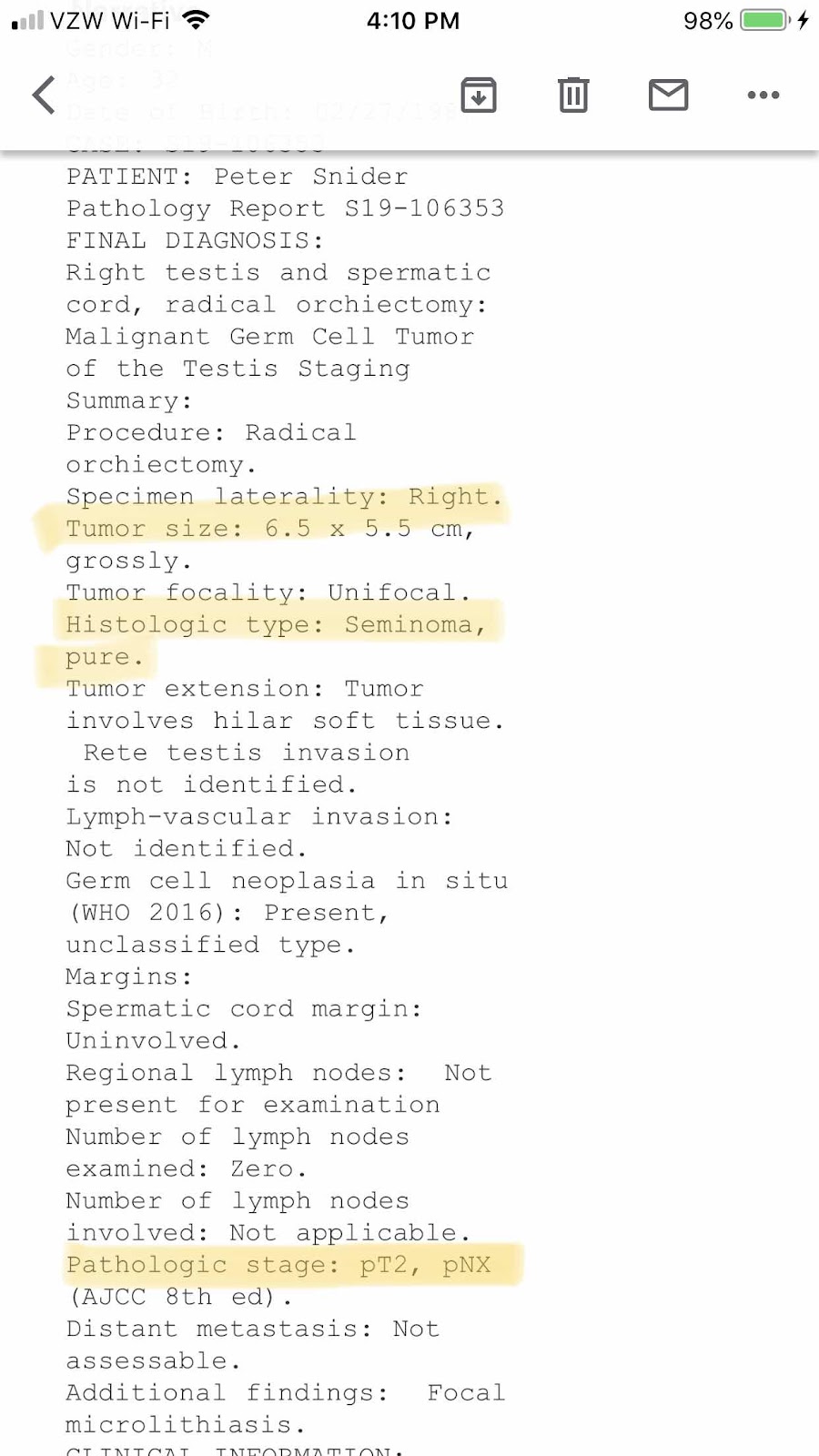
A few days later, Peter received his pathology report. His cancer was staged PT2, PNX, meaning his primary tumor was relatively large and it was unknown whether cancer had spread to his lymph nodes. 


After Peter’s surgery, we identified a Testicular Cancer Specialist team at Virginia Mason Hospital - the same hospital where Shannon is an oncology nurse.  Testicular cancer is a relatively rare disease, and most urologists see one or two cases in their careers. We wanted Peter to be under the care of the best of the best, so his next move was to request an appointment with Drs. Porter and Flores at VM, as they see eight to nine cases of testicular cancer per month in patients who come to them from throughout the country. 

We all squeezed into an examination room a week ago today for our first appointment with this team. We were told, first, that testicular cancer is a highly curable (not just treatable) disease and that, ultimately, Peter would be fine. At that time they also ordered a CT scan of Peter’s chest, abdomen, and pelvis, along with a few blood tests, and made a follow-up appointment for today, when we’d get a definitive idea as to next steps. Possible next steps would be Active Surveillance (just keeping an eye on things, via regular blood tests and CT scans, for a few years) or, if the CT shows cancer, radiation or chemo. 

Today we all nervously met again with Drs. Porter and Flores.   

We were so incredibly relieved and thankful to hear that Peter’s CT scan is COMPLETELY CLEAR! The doctors found nothing of any significance on his CT scan! (Peter called that one small insignificant spot on his liver “college”!) 

Peter now refers to “that week I had cancer” - but that week (or rather, with all the waiting, that month) has changed him, I am sure. Like his dad, he will always now be a cancer patient. That, in itself, must change a person. 

I know that cancer has changed me this year, too, as two men who I love most have dodged it - Tom, as he beat prostate cancer earlier this year, and Peter, as he beat testicular cancer last month. 

Can we now please just be finished with cancer for a while?!  That would be nice. 

Stumble Upon Toolbar

Thursday, November 08, 2018

This is your PSA (public service announcement) about your PSA (prostate-specific antigen) test.

Four years ago, during the summer of 2014, I was forced to ponder the possibility of life without Tom when he was diagnosed with prostate cancer. (I blogged about it previously here and here and here.)
Prostate cancer awareness
Long story short, our Independence Day celebration in 2014 was cut short when Tom ended up at the ER with what we thought was a bladder infection. Pain meds and antibiotics didn’t touch it, so within a few days we were at a urologist’s office, where a PSA blood test revealed an abnormally high score of 49. Knowing that a score higher than 4 can signify prostate cancer, I began to panic – and research. (Tom did neither of those things which, in retrospect, was wise. Dr. Google can be terrifying!)
Three weeks after his PSA test, Tom underwent a biopsy, which revealed stage one prostate cancer. Stage ONE! Not stage four, as I had feared and researched myself into believing. I cried happy tears when the urologist told us the news – which absolutely baffled Tom who, having no idea what I had encountered in my researched, questioned why I seemed relieved. It was only then that I revealed my fears to him. So he had to get used to the idea of having cancer at all, and I could breathe a sigh of relief that he’d be around for a while, after all!
IMG_2724
The urologist suggested removing the prostate surgically. But we decided to take some time to breathe and to get a second opinion at the University of Washington/Seattle Cancer Care Alliance, one of the top cancer centers in the country. Since the biopsy had shown that Tom’s cancer was stage one and slow-growing, he opted to take part in an “active surveillance” study through the university. Participants in this study have a PSA test once every three months and a biopsy once every 18 months to two years. Many men stay in the study for years, with little to no change in their cancer. Unfortunately, Tom won’t be among that group, as his cancer is now early stage two – still not a panic situation but, according to his current doctor, time to “look into options.” We are still confident that the cancer is well contained within the prostate, but we know that this is NOT a cancer you want to deal with once it has “escaped the capsule,” as they say. In those cases, it can be a killer.
So we are currently looking into treatment options. None of them are great, and all of them come with some degree of risk of both incontinence and impotence – though an excellent surgeon (which we have) can often spare nerves so both can be restored. (We’re too young for this!)
We feel confident that we caught this cancer early – thanks to a terrible infection four years ago. But we are still amazed that prostate cancer, the second biggest killer of men, doesn’t have the spotlight that breast cancer has for women. Men, it seems, are not routinely encouraged to have PSA tests the way women are encouraged to have regular mammograms.
Granted, the PSA is not a perfect predictor of prostate cancer, as it’s prone to false positives, but it is something!  I have begged our sons (29 and 31) to get baseline PSA tests (even asked for it for Christmas this year!) because both their grandfathers and their father had/have prostate cancer. But in my opinion, EVERY man should include a prostate screening in their regular check-ups, beginning sometime around 35-45. This means a DRE (digital rectal exam) and a PSA (blood test). I asked our PCP why this isn’t done on a routine basis and he said that most practitioners will do both tests when requested (and seriously, would the average man ask for a DRE?!), but that it just isn’t the “gold standard” at this point.
Tom and I began to mention this to our family and friends and were amazed at the number of men in their 50s, 60s and older who have never had a PSA test!
So this is our PSA regarding your PSA:
MEN: PLEASE, please, please… GET ONE!
PARTNERS: PLEASE, please, please… make sure he GETS ONE!
Rant over. Smile
10403927_10202010786942998_343282935945290173_o
.

Stumble Upon Toolbar

Tuesday, August 30, 2016

Well *that* was fun. Basal-squamous carcinoma excision, graft, and repair.

You know how you hear about those people who notice something odd on their skin and ignore it, waiting months – or even years – to have it looked at by a dermatologist? Well, that wasn’t me.

Until now.

Knowing that I have something called Dysplatic Nevi, I am at my beloved dermatologist at least every six months for a full body mole check. I’ve had lots of resulting biopsies, but never a cancer diagnosis.

Until now.

My last mole check was in May and was I given a happy “all clear, thumbs-up.” A few days after my appointment we went camping and took a few photos.

IMG_4820

Do you see anything on my nose?

May 13-A

I don’t. And neither did my dermatologist. Thus the all-clear.

We had quite a few out of town guests this summer, and we went on vacation, so I have a steady stream of photos. Let me know when you notice anything on my nose.

June 6-A

June 6th. Nada.

June 7-A

June 7th. Nope.

June 12-A

June 12th. Hmmmm, maybe a tiny bit of dimpling? Maybe?

June 13-A

June 13th. I don’t see anything. Do you?

June 25-B

June 25th. All I see are freckles.

July 9-A

July 9th. I think I see something. But certainly not enough to concern me. I didn’t give it a second thought – especially because we were on vacation (in the sun, along the Oregon Coast).

July 10-B

July 10th. Yeah, there’s a little nothing of a bump.

July 12-A

July 12th. Yup, there’s a little something there. It didn’t even occur to me for a second that it could be something – and keep in mind that I’m hyper-vigilant!

July 13-A

July 13th. Even with the sun shining right on it, it’s barely noticeable!

July 23-A

July 23rd. AHA!! In those 10 days, the little “pock” started to bleed just a little.

I called the doctor on the morning of July 25th and was seen that morning, due to a fortunate cancellation. I told Dr. Voss that I called it “my little Molakai” because it was sort of a small rolled half circle under my skin. The minute Dr. Voss saw it, she said, “Yeah, this could be something.” And it was!

She took a little cone sample. No big deal at all.

July27-Post biopsy

At that point, I fully expected that it was cancer and wasn’t surprised at all when I got a call a few days later to confirm that it was a basal-squamous cell carcinoma. An appointment was made right then to have it excised. Dr. Voss is a cosmetic dermatologist, known for her great surgical and repair abilities.

But I had to go all Dr. Google and decided to opt for a Moh’s procedure followed by plastic surgery instead. Dr. Voss is trained in Moh’s (I learned later) but chooses not to do this method. Although both Moh’s and excision have cure rates in the mid-to-high ninety percent, Moh’s rates are very slightly higher, so I figured I go that route. Due to the nature of the procedure (removing a layer, testing it, removing another layer, testing it, until margins are “clean”), Moh’s potentially takes quite a few hours. Then I’d be put under general anesthesia that afternoon for the repair, done by a partner plastic surgeon.

The consult call with the surgeon was a nightmare! He began the call with “Wouldn't it have been nice if we’d met at Whole Foods, you looking for peanut butter and I looking for jelly…” The he called me “hon” and “babe” repeatedly. I was looking for a good surgeon, not a date! To make things worse, every time I asked a question he was belittling and condescending and treated me like I was some bimbo. (Ya know, every great once in a while I just want to throw the whole “I have a graduate degree, summa cum laude, from Stanford University; you can talk to me as if I understand” thing in people’s faces!) I hung up the phone and dissolved into tears. I did not want that surgeon near me! But I resigned myself to it because by then all the plans were in place.

Two days later I found another suspicious mole and headed back to Dr. Voss, who asked why I’d cancelled the original appointment for the excision. I told her the whole convoluted story – at which point all four eyes were rolling!

Long story short (because the anesthesia is wearing off and I want to lie down), I cancelled the Moh’s and plastic surgery and Julie Voss did the excision today. It was a relatively quick procedure, in which she dug out the cancer (and then some, to be safe) and grafted some skin from near my ear to repair the resulting crater wound. No general anesthesia (but lots and lots of local anesthesia because, you know, I’m a redhead!), Queen and the Stones playing on the radio, and conversation as if we were all having coffee together! It was a perfectly pleasant experience! (Keep in mind, I’m still numb as I write this, so….)

Wanna see photos? OK, take a breath!

IMG_8115

Dr. Voss and me, pre-op. She had hoped to do some “flap” procedure, but when she saw the actual size of the cancer – mostly subcutaneous, thus the lack of external signs till very recently -- she decided she’d have to graft instead.

IMG_8118

We’ll operate right… here.

IMG_8119

I have no idea why it’s covered up!

IMG_8121

Maybe to keep it moist while they harvested some skin from near my ear?

IMG_8120

Malakai is now a crater!

IMG_8122

IMG_8123

Ta da! I have a honkin’ bandage on my swollen face, and will for a few weeks, but I’m glad to put all this behind me.

image1(6)

Yes, there is a miniscule chance that she didn’t get all the cancer, in which case she’d need to go back in, but she said she’s confident she got it all. The pathology report should confirm that.

The lesson for you? I’ve been yelling it from the rooftop for years: never ignore anything suspicious on your skin! If in doubt, get it checked! Please. Mine was an “iceberg, not an ice cream cone” -- in other words, mostly under the surface, not above the surface. Can you imagine if I’d ignored it?!

If you’ve been meaning to get that mole checked, please promise me that you’ll make an appointment right…

NOW!!

~~~~~~~~~~~~~~~~~~~~~~~~~~~~~~~~~~~

ADDENDUM (September 14, 2016, 15 days since surgery):

Best things first: The cancer is GONE!  The lab result from the surgery indicates “no residual basosquamous cell carcinoma identified.”

PHEW!

Here are a few photos of the healing process. Faces sure heal quickly!

1 day post-surgery: Nice stitch job. Dead-looking graft.

IMG_8135

2 days post-surgery: Still no blood supply to the graft.

IMG_8137

3 days post-surgery: Look – a blood supply has begun to establish itself!

IMG_8138

4 days post-surgery: I puffed up! So swollen!

IMG_8159

5 days post-surgery: Less swelling, a bit smoother.

IMG_8179

1 week post-surgery: Swelling is gone. Suddenly the wound isn’t so blatantly obvious.

IMG_8264

9 days post-surgery. Looking pink… and scabby. No more Band-Aid!

IMG_8317

12 days post-surgery. A bit smoother.

IMG_8604

13 days post surgery. The scab came off!

IMG_8620

15 days post-surgery. A bit scabby again, but I went to a workshop today and no one even mentioned it!

Sept14

I have an appointment to have a CO2 laser treatment next month, but I’m thinking that I might not even need it – especially since it costs $500 and insurance doesn’t cover it.

I’ll try to remember to post an add-addendum at some point down the road. If I forget and you’re curious, let me know!

Stumble Upon Toolbar

Thursday, August 21, 2014

Here’s the beginnings of the book I’ll (fortunately!) never publish

(Thinking that we might be on a long, tough road, and that I could share my experiences with other wives of prostate cancer patients, I began to write a book last month. That book will, fortunately, not need to be written after all. Not now, anyway! I am posting this here because I want to put information “out there” that might be of help to those who went through what we did last month. There is simply not enough information on the Internet regarding extremely high PSA scores that end up to NOT predict aggressive cancer!) 

Diary of a Prostate Cancer Wife

Month One: From Normal Life to Cancer Diagnosis
ER and Urgent Care
The Fourth of July has never been my favorite holiday. It’s too noisy and, with all those explosives, it’s just too fraught with the potential for harm. I’m always glad when the fifth arrives and my husband and kids are unharmed.
This year, when the fifth arrived my husband was not OK – and it had nothing to do with explosives.
Late in the afternoon of Friday, July 4th, Tom was finishing up some grouting work on the amazingly gorgeous backyard water feature that he’s been working on since last Fall. More an artist than a builder, he was carefully inlaying small, smooth black stones into the grout. Just as he was almost finished for the day, he noticed that he just plain didn’t feel well. He had been having a bit of trouble peeing that week, but it wasn’t more bothersome than simply taking notice. Now, though, he felt like he was suddenly coming down with the flu. His body ached in ways inconsistent with DIY projects.
We had planned to spend the holiday evening with our 30-year-old daughter and her boyfriend at their Seattle home with sweeping views of the entire Puget Sound. It would be the perfect place to watch fireworks and Tom wasn’t about to miss it. Before darkness even descended, though, Tom was spending more time in the bathroom than with us on the deck, and I could see in his face that he was feeling worse. When I suggested that we stop at the ER on the way home and he didn’t fight me I knew he was really sick.
It’s another bladder infection, we decided. Ten years ago, Tom had waited too long to get care when he had a mild urinary tract infection and it had become a full-blown bladder infection, just shy of a kidney infection. He didn’t want to re-live that, so there we were at the ER. An antibiotic (Cipro) and Pyridium (for the pain) were prescribed and we were sent home. Within a few hours, Tom would surely be feeling much better, just as he had ten years ago.
Except that he wasn’t feeling any better. The Pyridium didn’t touch the pain and he still felt like he had the flu. Now it was time for a Sunday morning visit to Urgent Care. Another urinalysis (they found nothing), another antibiotic (Suprax), a referral to a urologist, and we again waited for some sign of improvement.
Nothing.

On to a Urologist
By the time we saw the urologist the next Wednesday morning, Tom was feeling only slightly better. Dr. L, being a urologist, gloved up and (once I had left the room), gave Tom a quick digital rectal exam (DRE). When I stepped back in I immediately noticed a certain mildly stunned look on Tom’s face.
“There’s a nodule… a mass” someone said. (I still don’t remember if it was Tom or the doctor.) It was small, the doctor assured us, but “you must have a biopsy,” he insisted, “especially in light of your father.” Tom’s father had been diagnosed with prostate cancer when he was in his 70’s so Tom knew that the disease was in his family. Since he was in his 40’s, Tom has gotten regular PSA blood tests to screen for prostate cancer. His results had always been normal (under 4 ng/ml), even as recently as 18 months ago, when it had been a relatively comfortable 2.2 ng/nl.
The nodule was disconcerting, but Dr. L assured us that, although it could be cancer, it was more likely a benign calcium growth. He suggested that we focus first on getting rid of whatever was making Tom feel so sick. Dr. L insisted that the nodule and how Tom was feeling were two completely separate issues and that our immediate task was to wipe out whatever infection was causing Tom to feel so crappy. Besides, he insisted, he could not do a biopsy if there is any infection present because introducing bacteria into the prostate, and thus into the blood stream, could cause sepsis, “a far more serious concern than what your husband is dealing with now.”
To rule out a kidney stone, Dr. L sent Tom for a CT scan, which showed that there was no kidney stone. Good news. Or… wait. It’s not a kidney stone and there’s a “mass.” What the hell is going on?
I would just have to be patient, it seemed. It would not be the last time I’d hear this. Did Dr. L know that waiting is not my thing? That, being both German and a project manager, I need to act, to move forward, to connect the dots and get things done? Did Dr. L not know this? Apparently not. He told us to come back in one week and sent us home with yet another antibiotic (Bactrim), along with a pain killer (Uribel) that, unlike the Pyridium that turned Tom’s urine bright orange, would turn his urine bright blue. And, like Pyridium, the Uribel had no effect on Tom’s pain. (But we did joke that his urine was beginning to resemble a rainbow.)
During the next week, Tom finally began to feel much better. He could pee again without excruciating pain and his flu-like symptoms had disappeared. Had it not been for the nodule, we might not have felt the need to go back to the next appointment. But the word “mass” doesn’t sit well and we knew that we must, of course, follow through.
At our next appointment, Tom finally reported that he felt much better. Whatever was causing the flu-like symptoms and the painful urination had cleared up. Now we could focus on the mass and the dreaded but necessary biopsy. But first, a PSA test.

A Troublesome PSA
Once Tom’s blood was drawn for the PSA we left the doctor’s office and headed to lunch, where we waited for a call. I reminded him that he had been diligent in getting his PSA tests and that the last one, like the seven before it, was normal. Prostate cancer is extremely slow growing, I added, so there was no reason for more than a bit of concern.
After lunch, I headed home to work while Tom headed to the pharmacy to pick up the new prescription. He would call me if he heard from the doctor’s office about his PSA results. When Tom called me and mentioned that he had heard from the doctor himself, I was immediately concerned.
“So my PSA is 49,” Tom said. I was sure I misunderstood, especially since Tom didn’t sound all that concerned. My immediate thought was ‘it must be 4.9, not 49.’ “Are you sure?” I asked Tom. “That’s what he said. Forty-nine,” Tom replied.
As I hung up the phone I felt exactly as I had fourteen years ago when my father called me from the hospital where my mom was undergoing what we thought would be a routine procedure to explore her pelvic pain. “It’s cancer,” my father told me. “It was pretty extensive so they stapled her back up and she’ll be life-flighted to Portland (from Ashland, Oregon) tomorrow. Any chance you can fly down tonight?”
Four years later, Mom was dead from ovarian cancer.
Not again. NOT MY HUSBAND!
I immediately called Elisabeth, an ICU nurse – as if she could fix this. She shared my shock and off we both went into the land of panicked, subjective, terror-fueled research.
A retrospective word to the wise here: don’t head right to Dr. Google when you are initially terror-stricken and scared out of your mind. Instead, breathe first. Stop, breathe, and wait – even if just a few hours. The Internet is a miraculous place full of more information that we can absorb in many lifetimes, but it might not be the best place to turn to when you’re trying to process a PSA of 49 in the man you love.
The only one in the family who decided not to fanatically research our circumstances was Tom. Maybe it was avoidance, maybe it was denial, maybe it was even a form of self-preservation, but his attitude of “why would I scare myself before I even know exactly what I’m dealing with?” turned out to be the wisest approach.
During the next two weeks, I worked myself into a full-blown tizzy. Tom was remaining fairly calm (if intentionally uninformed) and I knew that he’d spiral into a severe depression if he was reading what I was reading on the internet (like, a PSA of over 10 usually means that the cancer is aggressive and has spread to other parts of the body, and life expectancy is less than five years) and if he knew how concerned family and friends, with whom we’d shared the news, were. So it became my role to shield him from all the negative emotions that our friends and family were feeling.

The Biopsy
Tom’s biopsy was scheduled for July 29th, three full weeks later than his first symptoms. He had requested general anesthesia for it. (As he told Dr. L., “If you don’t put me out, I’ll put myself out!”) He was a model patient, only mildly nervous, but fully resigned to the need for the procedure. Just fifteen minutes after I had taken a seat in the waiting room, Dr. L came out to tell me that all had gone well.
“Can you tell me anything new?” I begged. “Do you think it’s pretty bad?”
“I have learned not to even guess,” Dr. L replied. “We’ll know much more when we get the results back, but I have seen men in his situation who are just fine.” I didn’t dare to ask whether he meant just fine as in they didn’t have cancer or just fine as in they had cancer and survived.
After my short chat with the doctor, the nurse informed me that Tom would have blood in his urine, stools, and ejaculate for a few days to weeks.
‘Rainbow Man,’ I thought.
Once Tom was awake, dressed, and ready to head home, Dr. L talked to both of us, assuring us that everything would be fine. He is a happy and jovial man, always smiling, and it was beginning to piss me off. Really? Could he promise us that all would be fine, or is this his demeanor speaking?
We had an appointment set to meet with him in exactly one week, on Tuesday August 5th, to receive the lab results and find out whether Tom had cancer and, if so, how bad it was. Did we want to be called earlier if he received the results earlier? No, we decided, we wanted to hear it directly from him, in exactly one long, excruciating week.

The Long Wait and finally, a Diagnosis
We stayed busy that week, both in our careers and, on the weekend, in the yard. Tom worked on the backyard water feature like a crazy man, lifting heavy rocks (even when told not to), planting, and creating the most beautiful “bell tower” with three beautiful big bells that his parents had bought thirty years previous. I worked all weekend in the front yard, weeding out the crap and planting new, healthy flowers. As I hate gardening, I am convinced that I did this as a prayer, a call to the Universe, to be kind to us. If I weed out the old dead stuff, and plant healthy new stuff, will that translate to my husband?
Nothing gets me gardening like that. Hope must be a very powerful thing!
On the morning of August 5th, Tom went to work and I put in a morning of work at home. Tom’s plan was to meet me at the doctor’s office, but I begged him to come home first so we could drive there together. I was expecting to hear that Tom had aggressive prostate cancer that had grown outside the organ. This is, after all, what all my research was telling me about a man with a PSA of 49 with a palpable mass. Tom, on the other hand, was thinking that chances were pretty good that he had no cancer at all. But remember that he had also chosen not to do much research at all. This approach was a complete switch from our normal outlooks on life: I am normally the optimist and Tom is normally the… well, he calls himself a realist.
Dr. L was running late that day and the thirty minute wait seemed like hours. Neither of us talked much; there was little to say anymore. We would simply have to wait. Finally we were called to an examining room (not his office?) and waited briefly for Dr. L. He entered the room wearing his familiar, jovial smile and greeting us with a hearty “Hello!” My first thought was, ‘Not now. Don’t do this; it’s not fair!’
When Tom describes this moment, he jokes that the doctor happily exclaimed, “It’s good news! You have cancer!” This is actually not far from the truth.
“We did find cancer,” Dr. L told us. “But in only two of the 14 biopsy samples we took.” He went on to explain that he believed that the cancer was still fully contained, making it Stage 1 cancer of the prostate. “Not just treatable,” he added. “Most likely curable.”
Overwhelmed, I began to tear up – but with a smile on my face. This apparently confused Tom. Why would his wife be obviously relieved to hear that her husband had cancer? I think it was then that we both realized how different our approaches had been.


Month Two: Absorbing the News and Looking Ahead

Post-diagnosis
In spite of what I regarded as relatively good news, Tom had just been told that he has cancer, and that can never be easy. He was very matter-of-fact, asking Dr. L what he thought should be our treatment plan. Dr. L replied that Tom is still young and the cancer is still contained, which makes surgery a good option. But first, he said, Tom would need to get another CT scan (this one with contrast), as well as a bone scan and a chest x-ray.
We then asked Dr. L about sex. Yes, we are still relatively young and this is still an important part of our marriage. Dr. L mentioned that, in young healthy patients, sexual functioning normally comes back within a year. During that year, the penis will need what he called “physical therapy,” – the enervating of the organ with blood at least once a day, keeping it accustomed to its healthy lifestyle. (No, we don’t have sex every day! Not after 40 years! But most men, he explained, have at least one erection a day, often in the morning as they are waking up.) That therapy would take the form of a penile pump.
OK, we have just entered the category of “old people who go to Denny’s to talk about their physical issues.” Not that we would talk to other people about using a penile pump – and certainly not at Denny’s. But something changed in that moment, and it was obvious to both of us.
As we sat at the restaurant (not Denny’s!) that day, reliving and discussing what we had just been told, Tom came to understand why I was so obviously relieved and I came to understand why he was so stunned. I still think Tom did the right thing by not researching his situation before we had a diagnosis. After all, the Stage 1/contained diagnosis was so far from what a PSA score of 49 would predict! But I also think it made the reality of the cancer diagnosis – even very treatable cancer – that much harder to hear.
Had Tom not had what turned out to most likely be a bad case of prostatitis, when would we have discovered the cancer? As Dr. L had proposed from the very first appointment, Tom’s cancer and the annoying and painful urination that brought us to a urologist in the first place are probably completely unrelated. So this is the meaning of a blessing in disguise!
NOW Tom could begin to research treatment options – and he assured me that he would. But he has a naturally avoidant personality when it comes to unpleasant things, and I’m not sure he’ll delve deeply into the issue, instead relying on the recommendations of the doctors we’ll see next, on August 20th, at Seattle Cancer Care Alliance. Again, relying on their expertise is a wise thing to do, but I want to make sure that we explore ALL possibilities – such as THC oil, which some studies have shown to shrink tumors (and to not cause a year or more of impotence). But this is his body, his cancer. I have to remember that when I want to push research articles and personal anecdotes in his face.
When we received the cancer diagnosis, Tom was still recovering from the biopsy. Even though he’d been warned that blood would appear in his urine for a few days and in his ejaculate for up to a few weeks after the biopsy, the reality was quite disconcerting for him. Men aren’t used to seeing blood coming from their penises and I don’t think any forewarning can really prepare them for it.

Tests to “R/O Mets” (Rule Out Metastases)
Two days after the diagnosis, as Tom was still coming to terms with any cancer diagnosis and I was still breathing from the relative good news of a stage 1 diagnosis, Tom had a second CT scan, this time with contrast. It was fast and easy (I envy Tom for his pipe-like veins; mine are all but invisible!) and we quickly got the results: no sign of any cancer in the pelvis. This is great news, since the pelvis is, for obviously reasons, the first place cancer would likely spread if it had reached beyond the prostate. Almost a week after diagnosis and more than a month after Tom initially got sick, he had a bone scan and a chest x-ray – which brings us up to date. Now we wait for the results of those tests. If they come back negative, we will breathe another big sigh of relief before we meet with Dr. E at the Seattle Cancer Care Alliance on August 20th.
…and after another week of waiting, the results of the bone scan and the chest x-ray are in: ALL CLEAR.

Perspective and Choices
Two weeks ago, when I was envisioning life without my husband, when dark and scary thoughts about him suffering great pain and dying in my arms clouded my thoughts and wouldn’t leave, I could have never imagined being here in this place of relative joy because it’s curable cancer. Two weeks ago, I roamed through my days envious of those who lived their lives free from any worry of cancer – just as I had done only a few weeks previously. How quickly one’s perspective on life can change!
But we are not home free. Tom still has cancer and it must still be dealt with. I am trying not to settle too deeply into the “stage 1, curable” diagnosis until after our visit with Seattle Cancer Care Alliance next week for a second opinion. And that PSA score of 49 still nags at me. Yes, there were good reasons why it might have been elevated. He most likely had prostatitis, which has been shown to elevate PSA scores. We had had sex that morning, which has also been shown to elevate PSA scores (within 48 hours of the blood draw). But 49? That is so incredibly high! I know that there’s not much point in having another PSA done since we now have the results from the actual cells taken at the biopsy, but I really want another PSA test, just to pacify my fears.

Finally Breathing – and no need for a book!
Our appointment yesterday with Dr. Ellis at Seattle Cancer Care Alliance confirmed that Tom’s cancer is very early stage 1. Only two of fourteen samples had any cancer at all and each of those cores had less than 7% cancer. It turns out that he is a prime candidate for “watchful waiting” and, if his PSA is down in three weeks (we have to wait until six weeks post-biopsy), he can even be part of a “watchful waiting” study, in which he will have PSA tests every three months and at least two more biopsies. They are looking for data on how long men can safely wait till they treat non-aggressive prostate cancer. Of course, if they find that it’s becoming more aggressive, he can treat it right away. But I like the fact that Tom will be closely watched and someone other than me will be reminding him to go to the doctor! And we both like the fact that Tom will be contributing to important prostate cancer research. We do, after all, have two sons whose father and both grandfathers had/have prostate cancer! So our motivations are also quite selfish.

When I first started writing this, I was documenting what I believed would be a long, hard, uphill battle with prostate cancer. I had no idea during my private panic all through July that, come mid-August, we would all be back to normal life, breathing and moving forward with only a blip in the road.
At this point, my goal is to put some search terms out there – the search terms that I used, to very little avail - to find out what the hell might be going on with my husband. Things like:

Q: Can an extremely high PSA score be caused by something other than cancer?
A: Yes! Tom’s score was 49 and, while he has stage 1 cancer, it is NOTHING like the answers I found, most of which said “Yes, but anything over 20 is probably aggressive cancer.” Bullshit, I say! Dr. Ellis told us yesterday that he’s seen PSAs over 100 being caused by prostatitis, BPH, etc.

Q: Is a palpable mass along with a very high PSA always aggressive cancer?
A: NO! See above.

Q: Can prostatitis or BPH cause cancer?
A: No. But it might get you to the doctor, where very early, curable cancer might be fortuitously diagnosed. See above.

Q: My husband has an extremely high PSA score and a palpable mass. Will I be planning his funeral in the next year? (OK, this is not a search query… but it IS what I was so fearing.)
A: Likely not. Breathe. See above.

So I’m done writing this “Diary of a Prostate Wife” – at least for the time being, and likely for many years to come. It won’t be a self-published Kindle book or its own blog, after all. But I do want to get it out there so others like us might be able to find some information other than the dire predictions we found when we did our research. If this helps even one family avoid the terror we felt for an entire month, it will be well worth it!

ADDENDUM: February, 2015:
Tom has had two more PSA tests and one more bopsy since I wrote the above post. His PSA in September, 2014 was 12.89. In December, 2014, it was 9.11. And last week it was 3.94 - within the normal range!  His biopsy last week shows one of 14 cores with 1 mm of cancer cells, with a Gleason score of 3+3=6 (the lowest Gleason possible). This is consistent with very early stage one prostate cancer. So Tom isn't going anywhere! 

Stumble Upon Toolbar

Tuesday, August 05, 2014

Breathing (finally)!

The news is just about the best we could have hoped for:
Tom has early prostate cancer, stage 1, Gleason score 6, very likely confined to the prostate.
When I told Elisabeth, I said, “Well, this is the second best result we could have hoped for.” 
“No,” she insisted.  “If you would have told me that they found absolutely NOTHING, I wouldn’t have believed you… not with a PSA of 49 and a palpable mass!  I would have said to go right back to the doctor and tell him to figure this out!”  That’s our nurse daughter for you!
So it seems that this is the best news we could have hoped for and I can’t even begin to express how relived we are.  I think I’m actually a bit more relieved than Tom because I had done enough research to know that a PSA score of 49 and a palpable mass DOES usually indicate advanced cancer that has spread beyond the prostate.
I asked the doctor today what the deal was with Tom’s astronomically high PSA score and he said that he, too, was baffled since even a raging infection doesn’t normally raise it that high.
And get this: it seems that what brought us into the urologist’s office after two trips to the ER probably wasn’t even related to the cancer!  It was just a fortuitous (it turns out) event that forced Tom to get checked out.  Although he had had a physical 18 months ago with a normal PSA, making an appointment for another physical really wasn’t even on our radar so, had we not been forced into the urologist’s office, we would have never found this cancer at this early stage!  Thank goodness, it turns out, for painful and annoying urinary infections that force you to get to a doctor!
Yes, we have some decisions to make (surgery? radiation? other?) and yes, there will be a new normal that includes a cancer diagnosis. But Tom isn’t going anywhere, thank goodness!  I love that man more than I can ever express in words and I plan to grow very old with him – just as I promised him I would 31 years ago!
10417523_10202010783462911_5155342207716627867_n10447657_10202010784902947_3714811675376375303_n
IMG_2254laura 039Tom and Carol B

Stumble Upon Toolbar
Related Posts with Thumbnails